Unknown Pleasures, Plotted
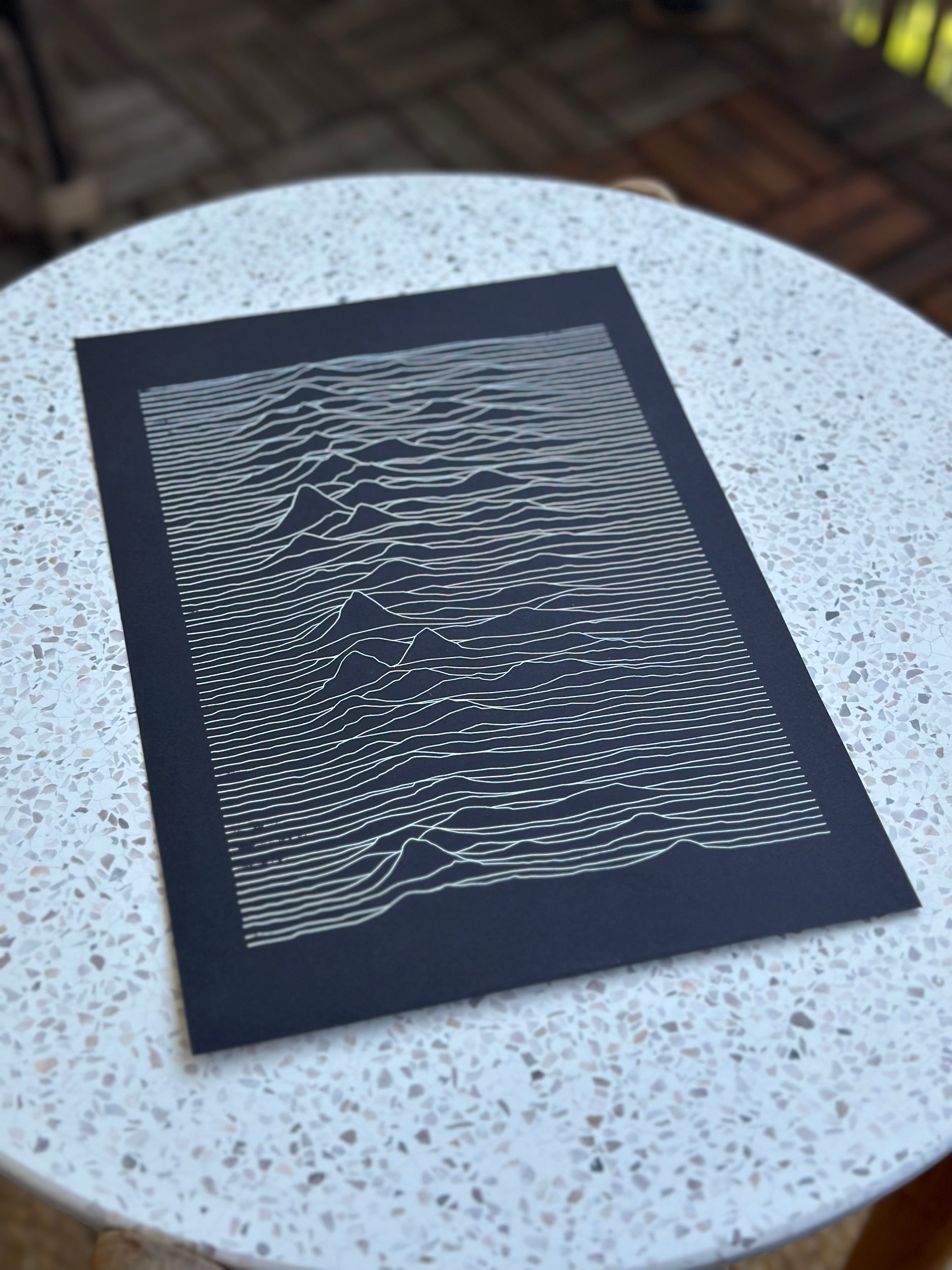
Peter Saville took a radio telescope image of pulsar CP 1919 from the Cambridge Encyclopaedia of Astronomy, flipped it white-on-black, and accidentally created the most screen-printed image in music history. You maybe own it on a shirt. Or on vinyl. I put it on A4 black paper with a plotter that was built before I was born.
Here’s how that went.
The Source Material
Someone already did the hard part: there’s a 3D STL of the Unknown Pleasures waveforms on Thingiverse. The stacked radio pulse ridges modeled as actual 3D geometry. Solid starting point.
Heightmap Conversion
A plotter doesn’t care about 3D geometry. Step one: flatten the STL into a grayscale PNG using fenrus’ STL to PNG converter, where brightness maps directly to Z height.

Already looks like the album cover, with alot of fantasy. Fenrus’ tool is browser-based btw and does the job without needing Blender or a CAM suite. Love it.
Erzberg Does the Actual Work
Erzberg is my own tool for converting heightmaps into SVG contour lines. Feed it the PNG, dial in x-line intervals and smoothing, get an SVG ready for a plotter.
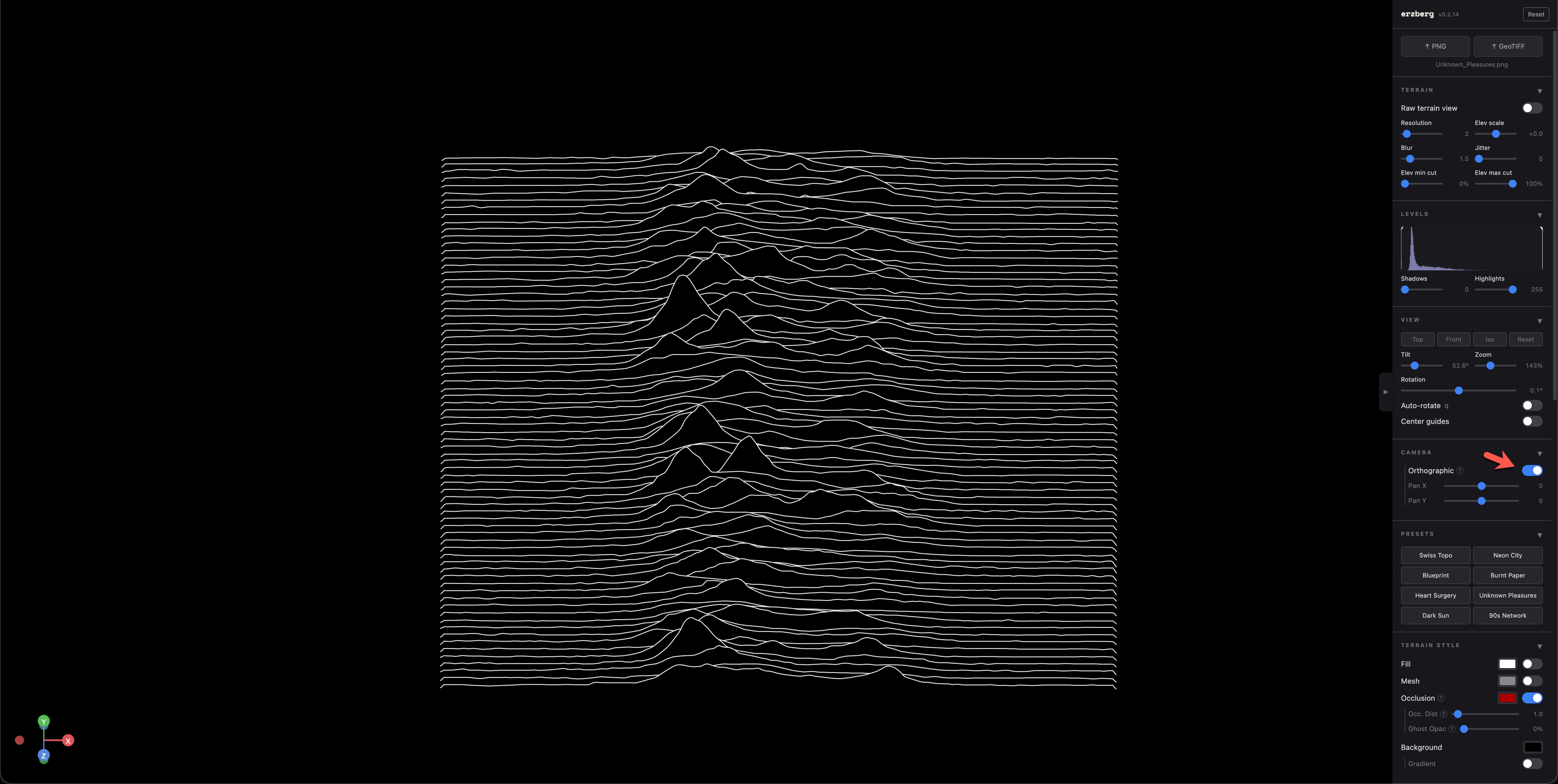
One thing that matters before you start manipulating settings and poking around: switch to orthographic projection in the view-section. The original album art has no perspective, no vanishing points, no fleeting lines. The ridges are perfectly parallel. Use a perspective projection and you’ll get lines that converge toward the horizon, which looks wrong immediately and is a pain to correct after the fact.
The x-spacing interval is the critical parameter here. Too coarse and you lose the texture of the overlapping ridges that makes the original image READ. Too fine and you get duplicate. Getting it right takes a few iterations.
SVG Cleanup
Raw SVG from Erzberg needs work before it’s plot-friendly. Inkscape for compositing and cleaning up stray paths. Then Vpype for the actual optimization pass: merge nearby lines, sort paths for minimal pen travel, kill duplicates. If you skip the Vpype step your plotter will spend half its time repositioning for no reason and the pen wear shows.

HPGL and the Sekonic SPL-470
The Sekonic SPL-470 is a vintage X-Y plotter from the early 80s. It speaks HPGL, the text-based instruction format that’s essentially “lift pen, move to coordinates, drop pen, repeat.” Vpype handles the SVG-to-HPGL conversion, a preview mode that I have written long time ago shows you exactly which lines fire in which order before a single motor moves.
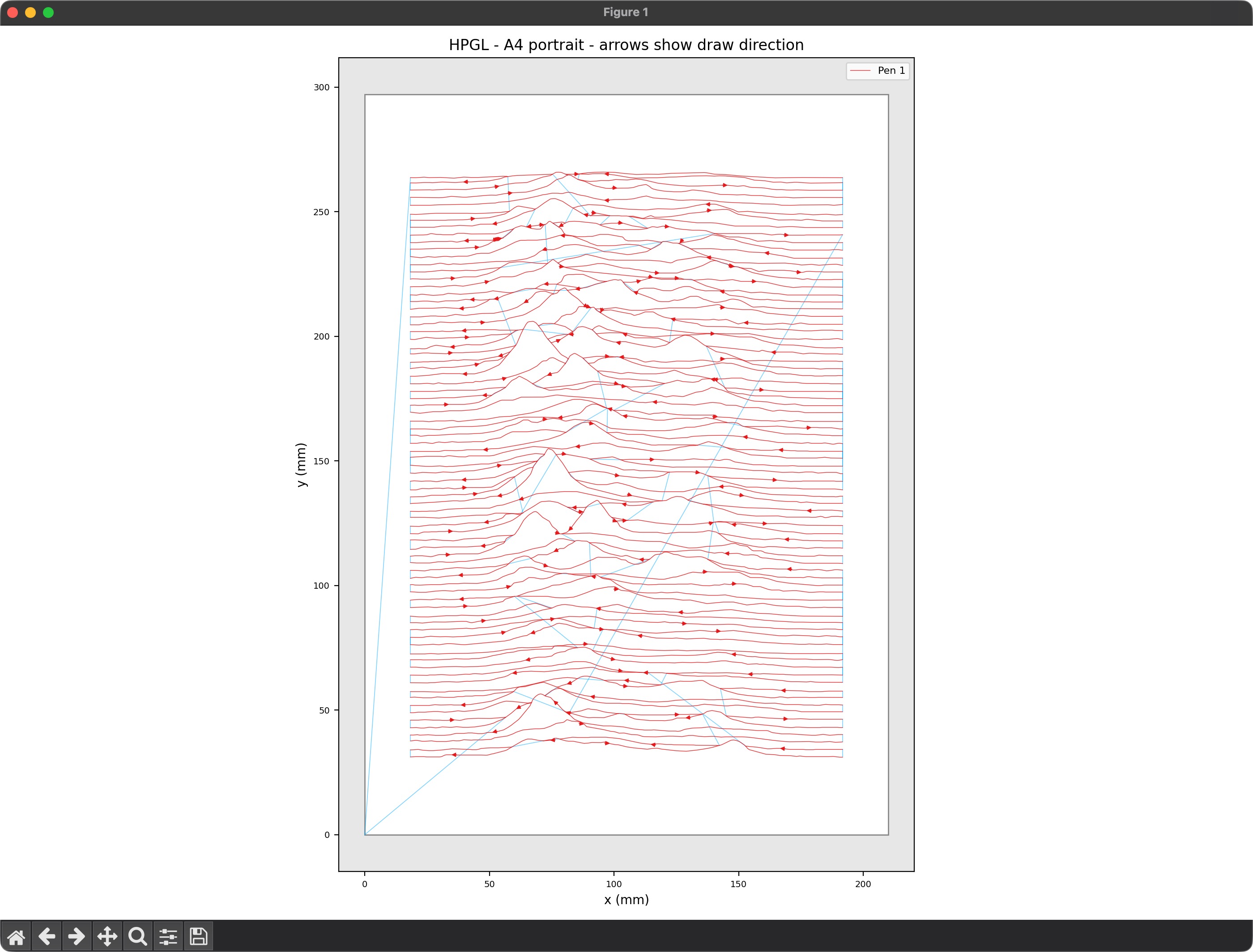
The pen travel visualisation is genuinely satisfying. You can watch the plotter’s entire plan play out in software before committing to paper.
The Plot
Full 4K, 16 minutes, pure ASMR stepper motor action: watch on YouTube.
The Result
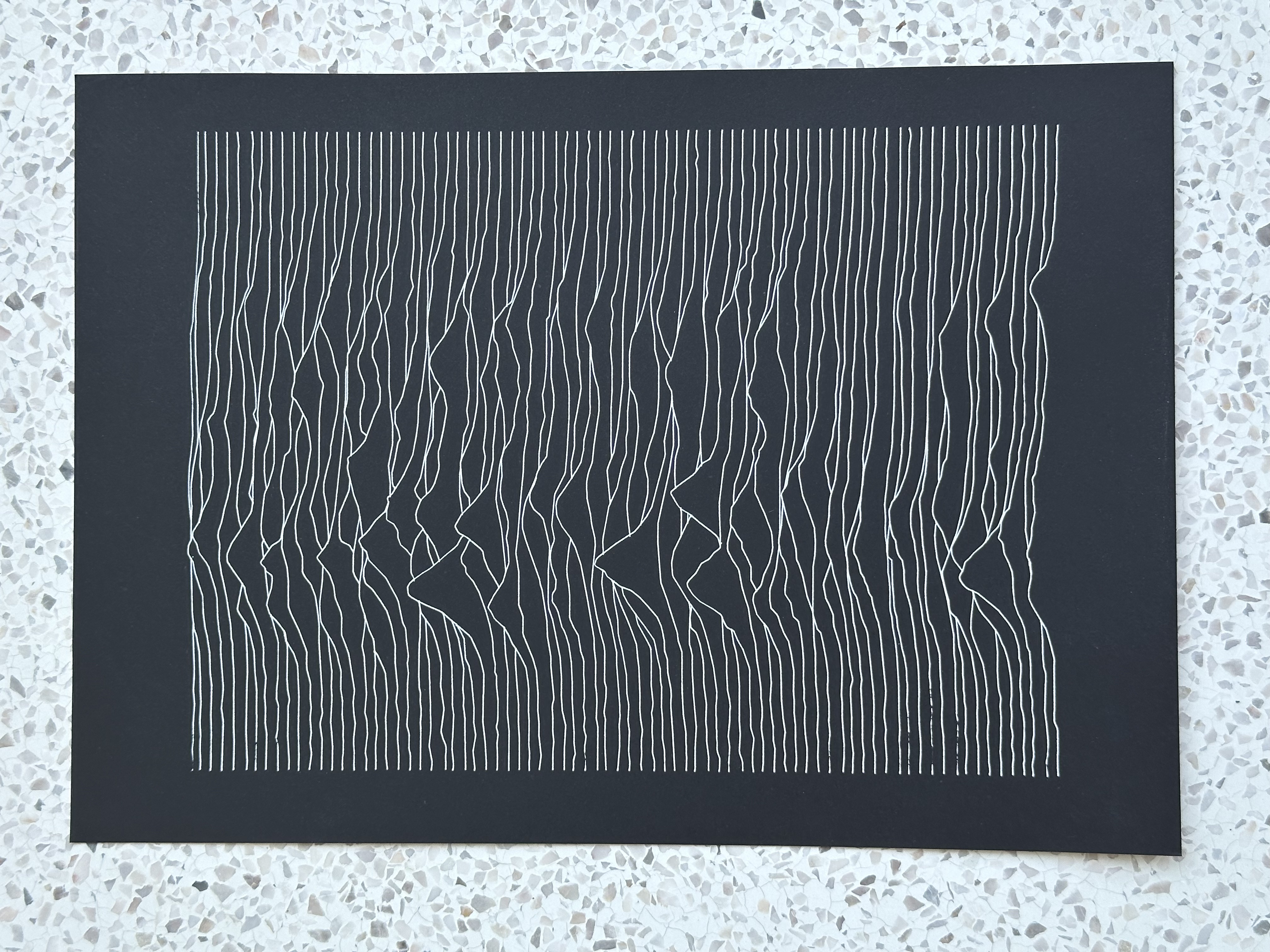
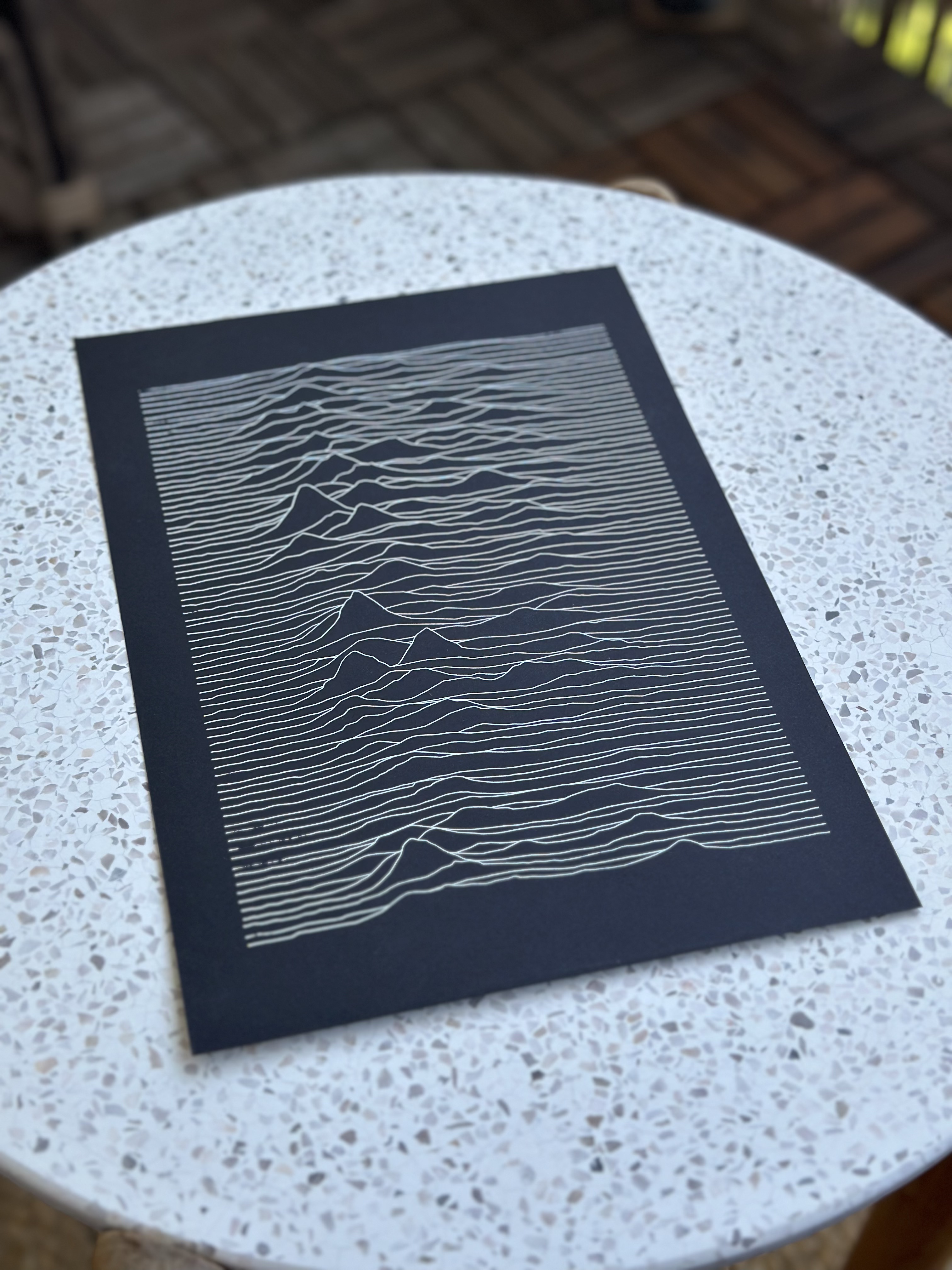
Paper: Clairefontaine Carb’on black, A4, 120g/m. Pen: Sakura Gelly Roll Medium 08, white.
The white-on-black is exactly what Saville did in 1979. The process here just involves considerably more software, a few decades of dust on the hardware, and the same amount of reverence for the source material.